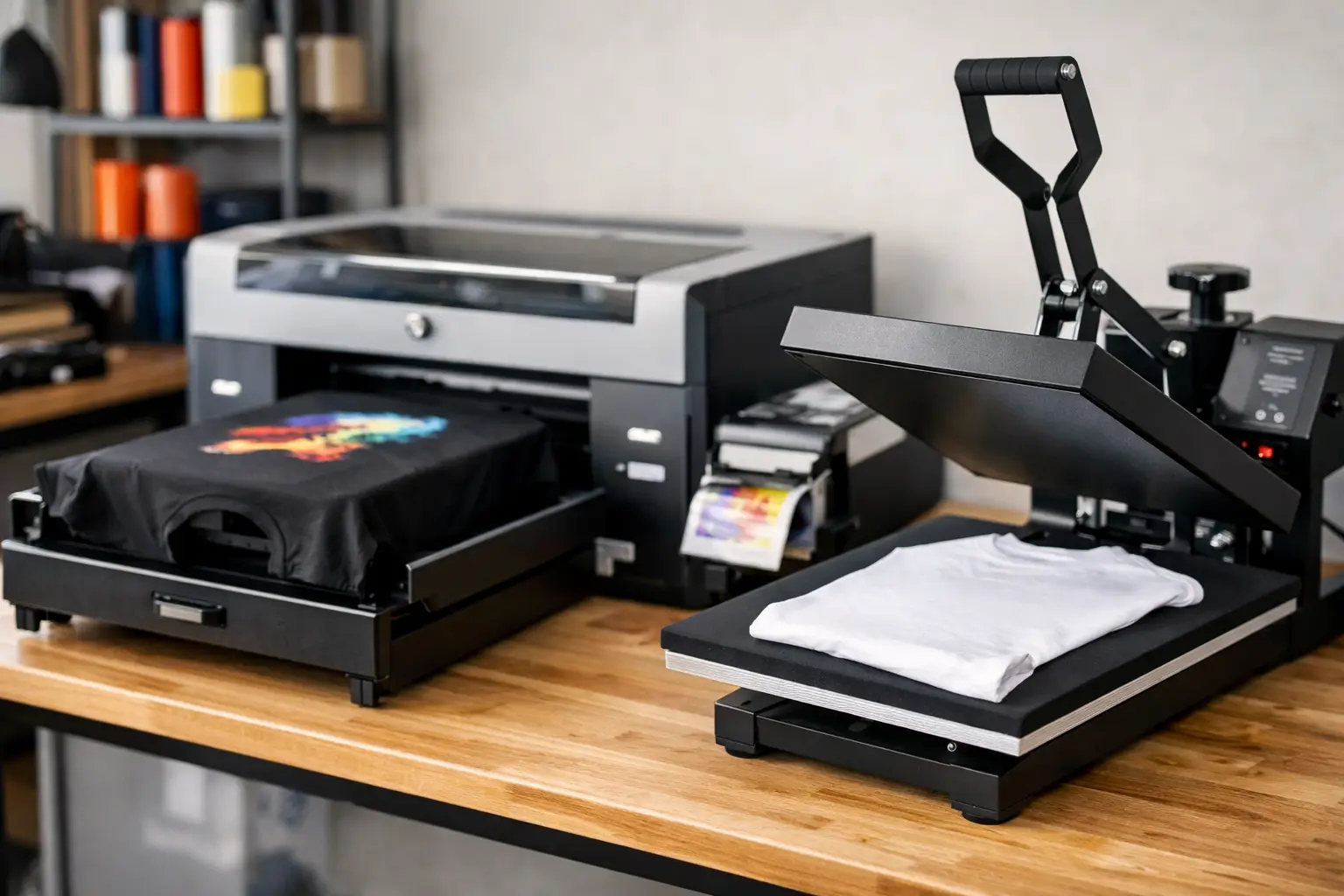
A custom t shirt printing machine can look like the answer to every apparel need until the first real production deadline hits. What seems simple on paper – print shirts, sell or distribute them, repeat – gets more complicated fast when artwork changes, garment types vary, and turnaround matters. For businesses, schools, teams, and event organizers, the right machine is less about hype and more about matching output to the job.
That is where many buyers go wrong. They shop by headline claims instead of production reality. A machine may print vivid color but struggle with dark garments. Another may be fast enough for short runs but too slow for larger programs. If you are responsible for outfitting staff, promoting a brand, or producing apparel for resale, choosing the right setup starts with understanding what the machine actually needs to do day after day.
What a custom t shirt printing machine really needs to handle
At a basic level, a custom t shirt printing machine applies artwork to garments. In practice, the job is broader. It needs to produce consistent results across sizes, maintain color accuracy, and hold up through wear and washing. If your orders involve employee uniforms, school spirit wear, fundraiser shirts, event apparel, or branded merch, consistency matters just as much as the first print sample.
The biggest factor is order type. A machine that works well for one-off names and numbers is not always the right fit for 500 company shirts. Likewise, a setup built for high-volume promotional runs may be inefficient for small personalized orders. Print method, labor requirements, ink type, and prep time all affect whether the machine makes financial sense.
Types of custom t shirt printing machine options
Most buyers evaluating a custom t shirt printing machine are comparing a few common production methods. Each has strengths, and each has limitations that matter once real orders start coming in.
Screen printing equipment
Screen printing remains one of the most dependable choices for larger runs. It is especially effective when you need strong color, durable prints, and competitive pricing at volume. For company apparel, team shirts, event programs, and school orders, screen printing often delivers the best balance of cost and consistency.
The trade-off is setup. Each design and color requires preparation, so short runs or highly variable artwork can become less efficient. If you need 24 shirts with one logo, screen printing may be ideal. If you need 24 shirts with 24 different graphics, it probably is not.
Direct-to-garment machines
DTG machines print directly onto the fabric and are useful for detailed, full-color graphics and small runs. They are often attractive to creators, startups, and businesses testing apparel ideas because they reduce setup compared with screen printing.
But speed and garment compatibility can be limiting. DTG generally performs best on certain cotton-heavy garments, and large-volume production can slow down quickly. Print feel, pretreatment, and maintenance also affect final quality more than many first-time buyers expect.
Direct-to-film systems
DTF has gained attention because it allows flexibility across different garment types and can handle detailed artwork. It can be a practical option for custom names, multicolor logos, and smaller batches where versatility matters.
That said, not every DTF workflow is equal. Film quality, adhesive powder, curing, and transfer consistency all play a role. A lower-cost setup may produce acceptable samples but uneven long-term output. For organizations that need repeatable quality across many orders, process control matters as much as the machine itself.
Heat press setups
A heat press is often part of the production process rather than the entire answer. It works well for transfers, names and numbers, and certain specialty decoration methods. Sports teams and schools often rely on this approach for roster changes and quick personalization.
The limitation is scale. A heat press can be a useful production tool, but by itself it may not be efficient for larger apparel programs unless the job is highly standardized.
How to choose the right machine for your order volume
The best buying decision usually comes down to volume, artwork complexity, and turnaround expectations. If your business needs frequent runs of branded shirts with the same design, a production-oriented screen printing setup may give you better economics over time. If you need small runs with lots of variation, DTG or DTF may make more sense.
This is where buyers need to be honest about future demand. Many people shop for the machine they hope to need instead of the one that matches current production. Overbuying creates overhead. Underbuying creates bottlenecks. If your typical order is 36 to 72 pieces, you should not evaluate equipment the same way as a shop planning daily 1,000-piece runs.
You also need to consider labor. Some machines look affordable until you factor in operator skill, maintenance time, pretreatment, curing, alignment, reprints, and wasted garments. A lower purchase price does not always mean lower operating cost.
Print quality is more than resolution
When buyers compare equipment, they often focus on image sharpness first. That matters, but print quality is broader than resolution specs. A good custom t shirt printing machine should also produce reliable color, solid wash durability, and consistent placement.
Fabric matters here. Cotton, poly blends, performance wear, fleece, and heavyweight tees all respond differently to inks and transfer methods. If you plan to print across multiple garment styles, ask how the machine performs on the actual materials you sell or distribute most often. A sample on a premium cotton tee does not tell you everything you need to know about performance shirts or hoodies.
Durability matters just as much. If shirts are used for staff uniforms, school events, sports teams, or regular promotional wear, the print has to hold up beyond day one. Customers remember cracking, fading, and peeling long after they forget the original price.
Cost, speed, and flexibility rarely peak at the same time
Every decoration method involves a trade-off. Machines optimized for speed can lack flexibility. Machines built for full-color variety may cost more per piece. Equipment that looks ideal for samples may not support dependable large-run production.
That is why procurement decisions should focus on your most common job type rather than edge cases. If most of your orders are repeat business with standard logos, prioritize consistency and throughput. If your business depends on short-run custom artwork, flexibility may be worth higher per-unit cost.
It also helps to think beyond apparel. Many organizations need shirts, hoodies, uniforms, bags, and promotional items working together under one brand program. In those cases, a machine is only one part of the fulfillment picture. Managing decoration methods across products, timelines, and reorder cycles takes production experience, not just equipment.
When buying a custom t shirt printing machine is not the best move
Not every organization should bring production in-house. That can be the right choice for established shops with steady demand and trained staff, but it is often less efficient for companies, schools, nonprofits, and event teams that need dependable output without building a print operation.
Owning equipment means managing maintenance, inventory, workflow, staffing, quality control, and missed-print risk. If apparel is not your core business, those issues can become distractions quickly. For many buyers, the better decision is working with an experienced production partner that already has the right mix of screen printing, embroidery, personalization, and fulfillment capability in place.
That is especially true when orders vary. One month you may need 50 staff polos. The next month you may need 800 event shirts, then spirit wear, then personalized team uniforms. A single machine rarely solves all of that well. An established provider with broad production capacity can usually handle those shifts more efficiently and with fewer surprises.
At Artik, that is the difference years of production experience make. The goal is not simply putting ink on a shirt. It is delivering the right decoration method, the right garment, and the right turnaround for the order in front of you.
Questions to ask before you commit
Before investing in any custom t shirt printing machine, ask practical questions instead of relying on sales language. What is the realistic hourly output on your most common job? How much daily maintenance is required? Which fabrics produce the best results? How much spoilage should you expect during normal operation? How difficult is color matching on repeat orders?
You should also ask what happens when demand changes. Can the machine support seasonal spikes? Can it handle left chest logos and full-front graphics with equal consistency? Does it fit your available space, ventilation, power, and staffing model? Those answers matter more than a spec sheet.
The right setup is the one that fits your business as it actually runs. If that means buying equipment, make sure it supports your volume, quality standards, and deadline pressure. If it means partnering with a trusted print provider, that can be the smarter operational decision.
A custom t shirt printing machine should make production more reliable, not more complicated. Start there, and the better choice usually becomes clear.