A company orders polos for a trade show, a school needs spirit wear before homecoming, and a contractor wants uniform shirts that still look sharp after months on the job. They are all asking the same basic question: what is custom apparel printing, and which approach will hold up, look professional, and arrive on time?
Custom apparel printing is the process of adding a logo, design, name, number, or message to wearable items such as T-shirts, hoodies, sweatshirts, hats, jerseys, and workwear. In practice, it is less about simply putting ink on fabric and more about matching the right decoration method, garment type, artwork, quantity, and timeline to the job. That is where many orders either go smoothly or go sideways.
For organizations buying branded apparel, this matters because the print method affects cost, appearance, durability, and turnaround. A 24-shirt order for a staff event has different production needs than 2,000 shirts for a company rollout. A one-color warehouse logo calls for a different solution than a full-color fundraiser graphic. Custom apparel printing is not one single technique. It is a group of production methods used to create finished apparel that represents a brand clearly and consistently.
What Is Custom Apparel Printing Used For?
Most buyers come to custom printing with a practical goal. They need apparel that identifies a team, promotes a business, supports an event, or creates a more polished customer-facing look. That can mean employee uniforms, school clubs, athletic programs, nonprofit campaigns, merch tables, hospitality staff apparel, or giveaway shirts for a product launch.
The best custom apparel does two jobs at once. It carries branding, and it functions as real clothing people will actually wear. If the shirt feels cheap, shrinks badly, or the print cracks after a few washes, the branding loses value. If the garment looks good and holds up, it keeps working long after the event ends.
That is why experienced buyers look beyond design alone. They consider fabric weight, fit, color consistency, reorder potential, and whether the decoration method matches how the apparel will be used. A soft retail-style shirt may be perfect for promotional giveaways. A durable work shirt may be a better fit for crews, field staff, or school maintenance teams.
How Custom Apparel Printing Works
At a basic level, the process starts with three decisions: the garment, the artwork, and the decoration method. Once those are aligned, production becomes much more predictable.
The garment selection sets the foundation. Cotton, polyester, and blends all behave differently under heat, ink, and wear. A lightweight event tee and a heavyweight hoodie do not print the same way. Neither does a moisture-wicking team jersey compared with a fleece sweatshirt.
Next comes the artwork. Some designs are simple and production-friendly, such as a one-color chest logo. Others include gradients, fine detail, oversized placement, or individual personalization like player names and numbers. Those design choices affect what methods are realistic and cost-effective.
Then the printer determines the best production approach. That choice is usually based on order size, number of print colors, garment type, placement, and deadline. Good production planning is what keeps an order from becoming expensive, delayed, or disappointing.
The Main Types of Custom Apparel Printing
Screen printing
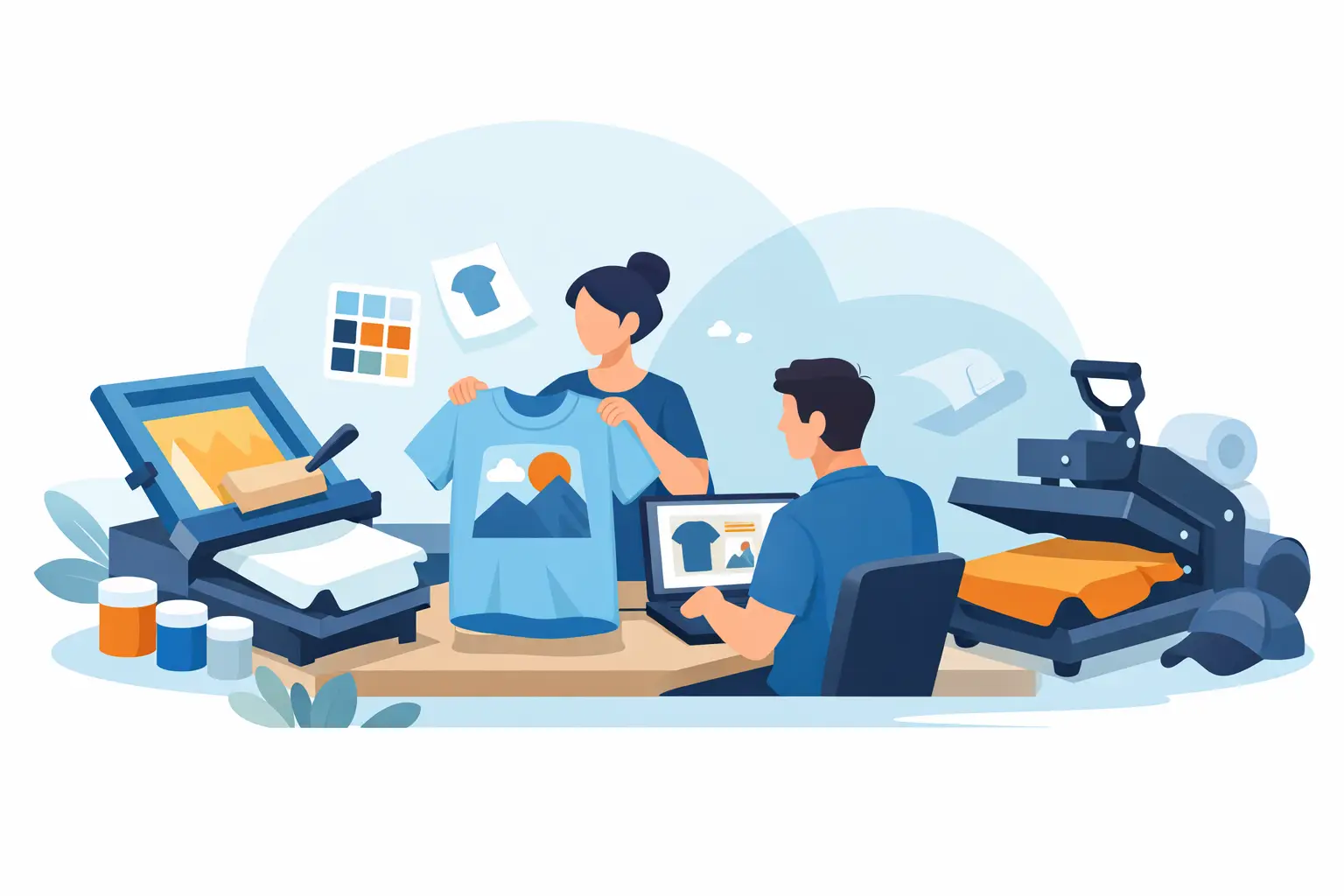
Screen printing is one of the most established and widely used methods for custom apparel. Ink is pushed through a mesh screen onto the garment, with a separate screen typically required for each color in the design.
For bulk orders, screen printing is often the most economical and dependable option. It produces strong, consistent color and excellent durability, especially on T-shirts, hoodies, sweatshirts, and uniforms. It is a strong fit for company apparel, school spirit wear, event shirts, and any repeat order where consistency matters.
The trade-off is setup. Screen printing usually makes the most sense when quantities are high enough to spread setup costs across the order. For very small runs or artwork with many colors, another method may be more practical.
Direct-to-garment printing
Direct-to-garment printing, often called DTG, works more like a printer applying detailed full-color art directly onto the fabric. It is useful for designs with a lot of color variation, smaller runs, or artwork that would be less efficient to separate for screens.
DTG can be a good option for short-run promotional shirts, internal staff orders, or designs with photographic detail. The advantage is flexibility. The downside is that not every garment type is equally ideal for DTG, and for larger quantities, it may not be as cost-effective as screen printing.
Heat transfer and specialty transfers
Heat transfer methods apply printed designs to garments using heat and pressure. These can be useful for smaller runs, variable data, names and numbers, and certain specialty applications.
This method often makes sense for sports uniforms, staff apparel, or orders where every piece needs to be slightly different. It is also practical when fast personalization is part of the job. Durability can vary depending on the transfer type and the garment, so it is worth matching the method to how the apparel will be worn and washed.
Embroidery
Embroidery is not printing in the strict sense, but it belongs in the same conversation because many branded apparel programs use both. Instead of ink, embroidery stitches the design directly into the garment.
It is commonly used on polos, hats, jackets, quarter-zips, and uniforms where a more professional or long-term look is needed. Embroidery adds texture and a premium appearance, though it is not ideal for every artwork style. Small text, gradients, and highly detailed graphics often need simplification to stitch cleanly.
What Affects Cost?
When customers ask for pricing, they are usually thinking in terms of price per shirt. That matters, but it is only part of the picture.
Quantity is one of the biggest cost factors. Larger orders usually reduce the unit price, especially with screen printing. Print location also matters. A left chest logo costs differently than a full front, full back, and sleeve combination. The number of ink colors, the complexity of the design, garment brand, fabric type, and whether each item needs personalization all affect the final quote.
Turnaround can also influence cost. Rush production is possible in many cases, but it depends on blank stock availability, artwork readiness, and current production volume. Buyers who plan ahead usually get better options and better pricing.
There is also the cost of making the wrong choice. A cheaper shirt that pills quickly or a print method that does not suit the fabric can create replacement costs, complaints, or a weak brand impression. For most organizations, value is not just the lowest number. It is getting apparel that looks right, lasts, and arrives when promised.
What to Look for in a Custom Apparel Printing Partner
The easiest way to judge a print partner is not by marketing language. It is by execution. Can they help you choose the right garments? Can they explain why one method fits better than another? Can they keep quality consistent across 50 pieces now and 500 more later?
A reliable partner should be able to guide artwork setup, confirm realistic production timelines, and flag issues before they become problems. That includes things like tiny text that will not reproduce well, colors that will shift on dark garments, or garments that are not suitable for the intended use.
Product range matters too. Many organizations do not need just T-shirts. They need hoodies for staff, hats for giveaways, polos for managers, uniforms for teams, and branded merchandise for events. Working with a supplier that can handle apparel and promo items together simplifies sourcing and keeps branding more consistent.
This is where experience counts. A company that has managed both small runs and high-volume orders over time is more likely to understand the details that affect delivery, quality control, and reorder accuracy. At Artik, that production mindset has been central since 1985.
What Is Custom Apparel Printing Really About?
At its best, custom apparel printing is not just decoration. It is a production service that helps organizations present themselves clearly, consistently, and professionally. The shirt is visible, but the real value is in what it supports – team identity, brand recognition, event coordination, employee presentation, and long-term visibility.
That is why the right answer is often, it depends. The best method depends on your artwork, your timeline, your budget, your garment choice, and how the apparel will be used after delivery. A good order is not defined by what was cheapest or fastest in the moment. It is defined by whether the apparel performs the way you needed it to.
If you are sourcing branded apparel for a business, school, team, or event, the smartest next step is usually not asking for one method by name. It is starting with the goal, the quantity, and the wear case – then building the order around what will work best once the boxes are opened.
“`
Frequently Asked Questions
What is the minimum order quantity for custom apparel?
It depends on the decoration method and product. Screen printing typically requires a minimum of 12 to 24 pieces to make setup costs worthwhile. Embroidery minimums are usually similar. If you have a smaller run, DTG or heat transfer may be more practical options. When you request a quote, we can recommend the best approach based on your quantity.
How long does custom apparel printing take?
Standard turnaround is typically 10 to 14 business days after artwork approval, though this can vary depending on the order size, decoration method, and current production volume. Rush orders are possible in many cases. The best way to confirm timing is to reach out early, especially if you have a hard deadline like an event or product launch.
What file format do I need for my artwork?
Vector files are ideal. That means AI, EPS, or PDF files with outlines. These scale cleanly without losing quality, which matters a lot for screen printing and embroidery. If you only have a JPG or PNG, we can work with it in many cases, but higher resolution is always better. Not sure if your file will work? Send it over and we will let you know before production starts.
Can I order different sizes in the same run?
Yes. Most bulk orders include a size breakdown across the same design. Just provide your size split when you request your quote and we will factor it in.
Do you ship across Canada?
Yes. Artik ships to businesses and organizations across Canada. Local pickup is also available at our Toronto location Monday to Friday, 9:00 AM to 6:00 PM.
I don’t have the contact page URL in the linking database. Let me check.It’s `https://www.artik.com/contact`. Here’s the updated CTA line: “`html
Ready to Get Started?
Whether you need 50 shirts for a staff event or 2,000 for a company rollout, the process starts with a conversation. Tell us what you need, and we will help you figure out the right garments, the right method, and a timeline that works. Request a quote and someone from our team will get back to you.
“`