A crowded expo floor gives you about three seconds to make someone care. That is why knowing how to design trade show giveaways matters. The right item can pull people into your booth, start a real conversation, and keep your brand in circulation long after the show ends. The wrong item gets tossed in a hotel trash can before the attendee reaches the parking lot.
Good giveaway design is not about picking the cheapest product with the biggest imprint area. It is about matching the item to the event, the audience, your brand standards, and your distribution plan. When those pieces line up, giveaways become a practical marketing tool instead of a line item you regret.
Start with the job the giveaway needs to do
Before you look at products, decide what success looks like. Some giveaways are built to stop traffic. Others are meant to support lead generation, reward qualified prospects, or reinforce a premium brand image. Those are not the same job, and they should not be served by the same product.
If your booth goal is volume, lower-cost items with broad appeal can work well. Think tote bags, pens, stickers, or simple drinkware. If your goal is to start better sales conversations with a smaller group, you may be better off with fewer, higher-value items given after a product demo or a qualified meeting. A tech buyer at an industry conference will respond differently than a parent walking a school fundraiser expo.
This is usually the first place teams overspend or underspend. They buy premium pieces for everyone when most visitors are casual passersby, or they buy bargain items for a high-stakes B2B event where their brand needs to signal quality. The item should fit the business objective first.
How to design trade show giveaways around your audience
The best giveaway is useful to the person receiving it. That sounds obvious, but a lot of event planning skips this step. A strong design choice starts with asking what the attendee will actually carry, wear, use at work, or keep in a car, backpack, or desk.
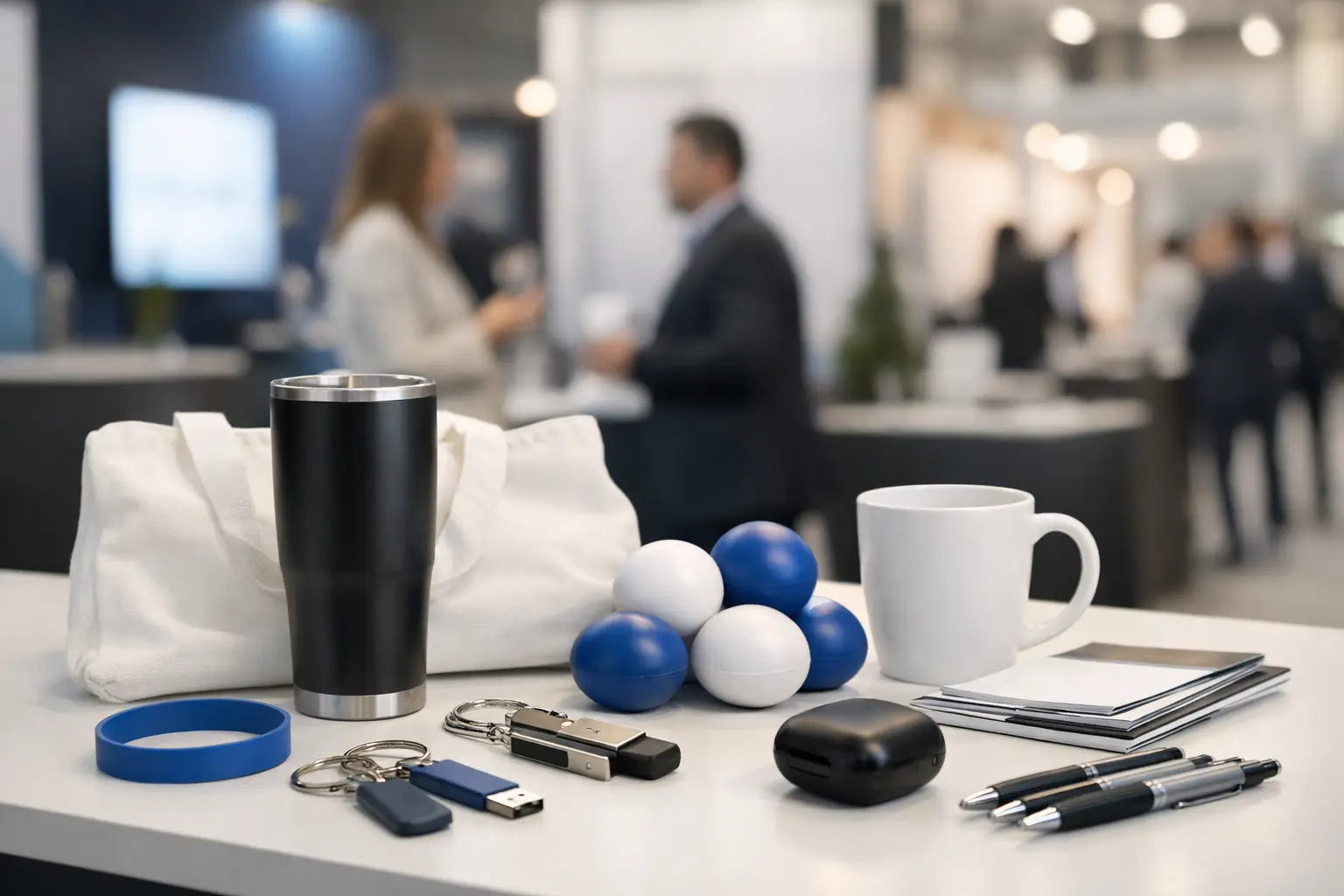
For corporate events, practical products usually outperform novelty products. Branded notebooks, insulated tumblers, phone accessories, tote bags, and quality pens tend to have staying power because they fit into the workday. At family-facing events, schools, community fairs, and sports tournaments, softer items like T-shirts, drawstring bags, water bottles, and hats often get better use.
Use case matters more than trend. A flashy item can create short-term excitement, but if it has no purpose after the show, your brand exposure ends fast. On the other hand, a simple item with daily utility may generate impressions for months. That is a much better return, even if the handout itself feels less exciting in the moment.
Choose products that fit your brand position
Every product sends a message about your company. If you are trying to present your business as dependable, established, and detail-oriented, flimsy merchandise works against you. People notice the difference between a solid, well-printed item and one that feels rushed.
That does not mean every giveaway needs to be expensive. It means it needs to feel intentional. A cleanly printed tote bag with a strong logo and readable message often performs better than an overdesigned gadget with limited use. A soft, well-made T-shirt can create lasting brand exposure, but only if the fit, fabric, and print quality are good enough that people actually want to wear it.
This is where product selection and production quality have to work together. An item that looks great in a catalog but prints poorly in your brand colors is not the right item. The best trade show giveaways are designed with the imprint method, color contrast, and material finish in mind from the start.
Keep the design simple enough to read fast
Trade show attendees do not study giveaways. They glance at them. That means your design has to communicate quickly. In most cases, your logo, a short message, and a clean visual treatment are enough.
Trying to fit too much onto a small product usually reduces impact. Tiny text, multiple slogans, and busy artwork can make the piece look cheap even when the product itself is good. If your logo is strong, let it do the work. If your company name is not self-explanatory, a short descriptor can help. Keep it brief and legible.
Color also matters. High contrast tends to win on the show floor and in daily use. A dark logo on a light tote, or a white mark on a navy tumbler, usually reads faster than low-contrast combinations. Brand consistency matters, but readability matters too. Sometimes the best branded version of a giveaway is not an exact copy of your website palette. It is the version people can actually see.
Match the giveaway to your booth experience
A giveaway should support how your booth operates, not create more friction. If you expect long lines and quick interactions, easy-grab items make sense. If your team wants more time with each visitor, a tiered approach is often smarter.
For example, you might use one low-cost item to attract traffic, then reserve better gifts for people who sit for a demo, complete a form, or book a follow-up meeting. That structure helps protect your budget and gives your staff a reason to guide the conversation forward.
Think through logistics as well. Large items can create storage problems before the show and packing problems for attendees afterward. Fragile items can break. Heavy items increase shipping costs. Apparel can be excellent for visibility, but sizing adds complexity. Sometimes a universal product like a tote or drinkware piece is easier to manage than wearable merchandise, especially for fast-moving events.
Budget for cost per impression, not just unit price
One of the biggest mistakes in giveaway planning is focusing only on the lowest per-piece cost. A cheaper item is not a better value if it gets discarded immediately. A slightly higher-quality product that stays in use can be more efficient over time.
When comparing options, consider the full picture: unit cost, setup charges, print method, shipping, event quantity, and likely retention. A 50-cent item that lasts one day may not outperform a $3 item used for six months. It depends on your audience and your event goals.
This is also where experience with production planning matters. Ordering too few pieces creates missed opportunities. Ordering too many can leave you with event-specific inventory you cannot reuse. If the item is evergreen and the branding is broad enough for future events, extra stock may be worth it. If it is tied to one campaign, be more conservative.
How to design trade show giveaways that people keep
Retention usually comes down to three things: usefulness, quality, and design restraint. People keep products that solve a small everyday problem. They keep items that feel sturdy enough to trust. And they keep pieces that do not look like clutter.
That is why practical categories consistently perform well. Tote bags get reused at stores and events. Drinkware stays on desks and in cars. Hats and shirts extend your brand into public settings when they are comfortable and attractive. Office items can work too, especially in B2B environments, but only when they are well made and easy to use.
If you are designing apparel giveaways, be especially careful. Event shirts can be valuable brand exposure, but only if they fit the audience and look wearable beyond the trade show. A shirt with a giant sales pitch on the back may get worn once. A cleaner design with subtle branding has a much better chance of becoming part of someone’s regular rotation.
Don’t let timing undercut the result
Even a strong giveaway can fail if the order process is rushed. Product availability, decoration method, proofing, and delivery timeline all affect the final outcome. If you wait too long, you may end up choosing from leftovers instead of the products that best fit your event.
Early planning gives you more control over budget and quality. It also gives you time to test options against your booth goals. For companies exhibiting regularly, building a repeatable giveaway strategy can save both time and money. Standardizing a few dependable product types across events often works better than reinventing the plan each time.
A reliable production partner helps here. If your vendor understands branding, print quality, and event deadlines, you are less likely to run into surprises. That is especially important when you are coordinating apparel, promo products, and booth materials under one timeline. Companies that need consistency across multiple events often value that execution more than chasing the newest item on the market. That is one reason buyers have trusted experienced suppliers like Artik for years.
Trade show giveaways work best when they are treated as part of the event strategy, not a last-minute add-on. Pick something useful, brand it clearly, and make sure the quality reflects the company you want people to remember. If the product earns a place in someone’s desk, bag, or daily routine, your booth stays with them long after the badges come off.